Identifying drivers of change and predicting a utopic or distopic future. What will your future look like?
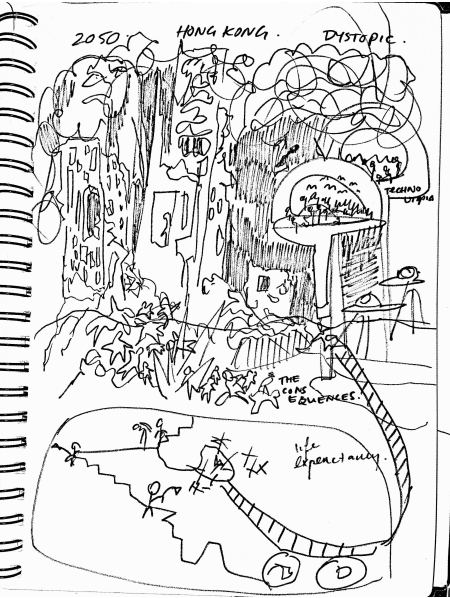
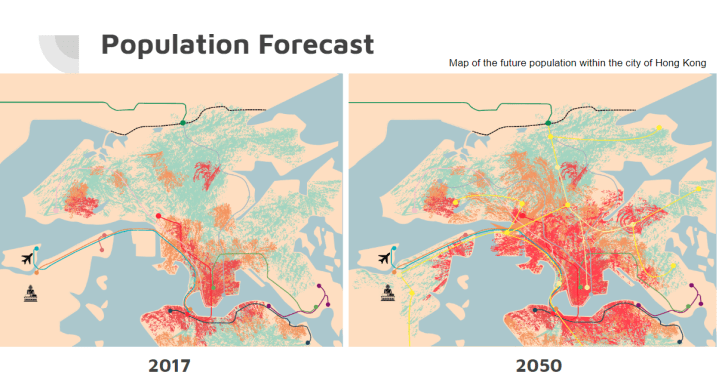
future scenario 1: a distopic Hong kong: hyper increased population affecting pollution and climate change
Scenario Building: Backcasting
Week 4 tutorial
Emerging issues analysis
- Identifies and locates trends that may motivate new social innovation
- Seeks to identify issues before they become unwieldy and expansive (inaytallyah)
The futures wheels
- Consequences of those issues — develops consequences of today’s issue into the longer term future
- Expense of equity
Casual layered analysis
- Four dimensions:
- Solutions to problems are short term
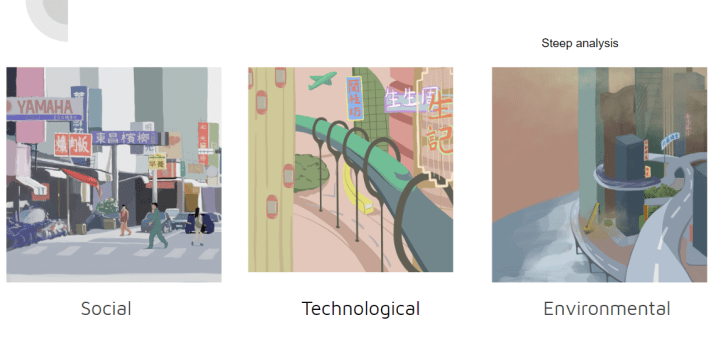
- Deeper analysis of the issue looking at steep cause
- Culture or worldview – what we think is real or not real, the cognitive lenses we use to understand the world
- Myth or the metaphor — deep unconscious story
Hierachy – flip heirachy to achieve change
Scenario Consultation:
- Hong Kong
- Overpopulation in 50 years from now
- Considering how the mega city will be powered, transportation, climate levels,
- Need a more efficient or sustainable energy in the future — climate change
- Individual energy supplier — regulate real time feedback
- Need to consider other cities as hong kong is already dense so in the future its only going to become denser and its not like we can knock everything down to build more
- Installation of digital technology — energy cloud?
- Need to address more renewable power sources as carbon emissions are too high — fossil fuels 80% of our source
- green house emissions
- Solution for the future for climate change and energy is we need a combination of resources not just one, but lots of different ones — nuclear
- Possibilities of heat island — the possibilties of is endless as it would
- Transportation issue — people would begin working from home — online instead of travelling to a workplace
- International
- Geographical location –
- Wealthy have an advantage?
- Demographics and afforability
- How does architecture and elements
- Summary- understanding the overpopulation and over crowding hong kong in 2050, understanding that this is a distopic future. As a result of this overpopulation, pollution has grown, technology has advanced drastically
Backcasting
| 1954 Miranda |
Many people immigrated to Hong Kong because of China’s revolution. There were ordinary people and many rich people, especially some entrepreneurs in Shanghai who fled to Hong Kong. They have money and experience in doing business, so they started to open factories in Hong Kong. At that time, the urban characteristics of Hong Kong completely changed. (‘world factory’) The society was rich and poor, the poor were many, the places were small. The entire society is still relatively turbulent. Started to have multi-storey buildings. |
| 1958 Miranda |
|
| 1962 Miranda |
https://www.businessinsider.com.au/hong-kong-50-years-ago-and-today-2014-9?r=US&IR=T |
| 1966 Miranda |
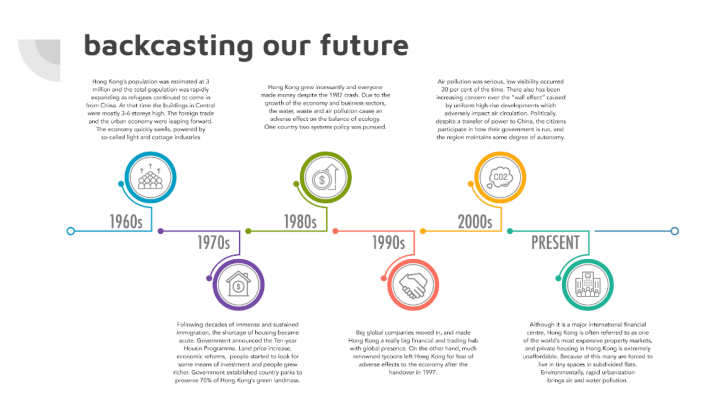
Sum-up: In the 1960s, Hong Kong society was rapidly changing. The foreign trade and the urban economy were leaping forward. The total population was rapidly expanding. The government did not manage the resources to cope with this sudden change. |
| 1970 Daisy | Rents in Hong Kong have skyrocketed and the government announced an interim freeze bill on rents;
Establish of Legal Aid Department, it provides legal aid in legal representation for Hong Kong citizen; The Hong Kong government introduced six years of free compulsory education. |
| 1974 Daisy | Chinese became an official language with the same legal effect and status as English;
the Independent Commission Against Corruption was established; the Hong Kong Consumer Council was established. |
| 1978 Daisy | Institution of The Home Ownership Scheme, it is a subsidized-sale programme of public housing in Hong Kong managed by the Hong Kong Housing Authority;
Cancellation of Hong Kong Secondary School Entrance Examination. |
| 1982 Daisy | 1982 Hong Kong District Board elections, were the first ever local elections under the new creation of 18 district boards;
The new section of Tsuen Wan line (metro network in Hong Kong’s MTR) opened on 10 May 1982; |
| 1986 Annie |
|
| 1990 annie | July 9, 1992: Conservative British politician Chris Patten takes up his post as Hong Kong’s last governor. 1992 December – Hong Kong stock market crashes. |
| 1994 annie | 1994 June – After nearly two years of bitter wrangling, Hong Kong’s legislature introduces a stripped-down version of Chris Patten’s democratic reform package. The new legislation widens the franchise but falls far short of providing for universal suffrage. |
| 1998 Annie | Hong Kong was under British rule for 156 years before reverting to Chinese sovereignty on July 1, 1997. Since then, July 1 has turned into a day of protest for those demanding greater political freedom in Hong Kong.
http://www.china.org.cn/english/features/dengxiaoping/103372.htm# https://www.sbs.com.au/news/timeline-key-events-in-hong-kong-s-history |
| 2002 liv |
|
| 2006 liv |
|
| 2010 liv | |
| 2014 liv | |
| 2018 Made up scenario from this point onwards |
Hong Kong real estate market:
|
| 2022 |
|
| 2026 |
|
| 2030 |
|
| 2034 |
|
| 2038 |
|
| 2042 |
|
| 2046 |
|
| 2050 |
|
The future: QUESTIONS
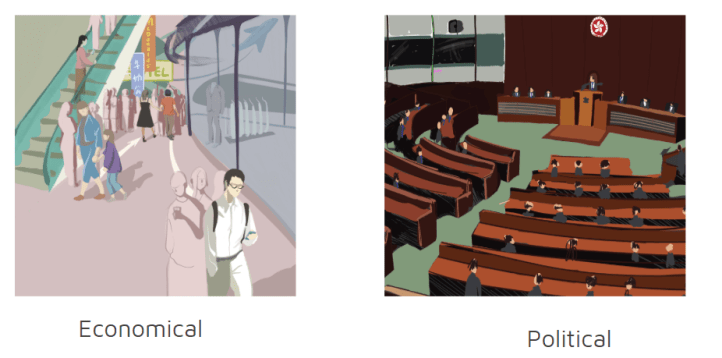
What type of government are they going to have?
Predictions state a decline in working? Why? Is this because of a growth in technology or growth in population?
More pregnancy rates?
TASK 2 SLIDES
WEEK 8 PROTOTYPING
BRAINSTORM
Love in Hong Kong 2050
- Child policy – suggesting lack of love or more of it? Fake ID
- Cage housing suggests a lack of love for the poorer people
- Environmental love – not loving the earth enough to prevent this poor pollution and climate change – loving technology more because we chose to pursue it more than earth and its natural resources
- Technological love? A love for technology and building lots of technology – new tech inventions – love for communication and socialising with loved ones through new technology
- Immigration and moving countries to be with loved ones
- Love in general lol
- Love for the human body to create oxygen tanks to care for the peopel within the buildings – ventilation systems and masks
- Love of the city and people choosing to stay there despite its horrible climate and overcrowdedness- transport systems
- Love for the city and respect for the law through use of contraception pills/ pods – love for yourself and ur future and the future of the city
WEEK 9 – HANDS ON PROTOTYPING ACTIVITY


Prototypes of the the oxygen bottles, cage house and hyper train
 Kool Kids Klub