
1a. Literature Review/ Horizon Scanning: outline the research relevant to your theme (Eat, Love) include two to three scholarly sources.

Figure 1: Townsend O. 2018, A melting planet, watercolour
Ideally, the world is forever changing and transforming itself. It does so through the various aspects of technology, science, culture, communication, transport, lifestyle, cities, attitudes and values, in that the more the natural environment changes and the more advancements we make into developing those changed areas, the more we reshape our own future. Much of everything we know depends on the variables of the climate around us, but it cannot be altered or changed, well not in this day and age at least. The understanding of climate change and its variants is a key influencer in a prediction of the future considering it is a key contributing factor, affecting all aspects of human life on our planet, from our biology, life expectancy, to food, transportation, travel, housing, livestock and overall human urban growth. If it were to change its conditions drastically, not only would we see a depletion in natural resources and a hyper-increase in city population, we would also see a shift in life and the way we go about it.
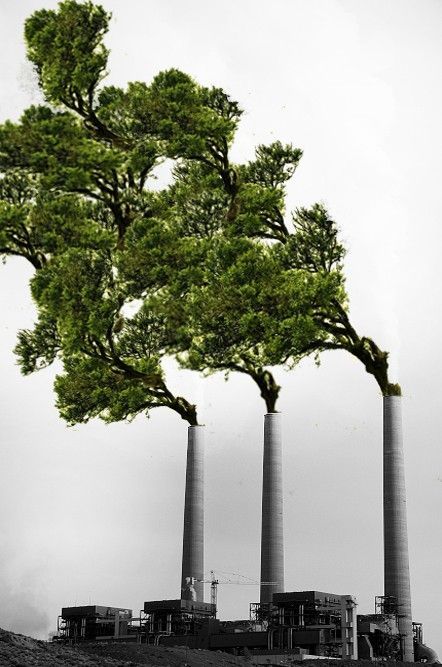
Figure 2: Battersby E. 2017, Concept: Pollution ‘Green Earth’ Global Warming
The idea behind global warming/heat and the urbanisation heat production comes as a result of population growth and greenhouse gas emissions. Essentially as our population grows and builds upon our cities and technological advancements, we increment less time into the ratio that will suggest when climate change will take a sudden dip into effect. Thus the higher our population and urban population grow, the quicker we change our climatic atmosphere. In a prediction recorded by the UN, it is suggested that our population is meant to rise from our current 7.5 billion to reach an approximate 9.8 billion by the year 2050 (UNESA 2012b) which suggests an increasing population growth. McCarthy suggests that in order to understand how the climate will change, we firstly need to understand population dynamics and the way its rises and falls, and how more people will change the climate as it adjusts to this change.
“For climate impacts and adaptation research it is important to understand and estimate risks of future climate stress, so it is essential to account not only for climate change, but also population dynamics, urbanisation and energy use” (McCarthy)
Coastal change also stems from climate change as essentially with the triggered effects of urban population growth and this heat influences the melting of polar caps, heightening our tides and shorelines. Scientist, Colin D. Woodroffe in his scientific review, argues that our climate and the way it changes is an area of major concern, considering the great power climate change has with its ability to cultivate and change our society.
‘There is a broader awareness than ever that we live in a changing environment. The spectre of climate change is of wide concern, and the observed trends and anticipated consequences of an acceleration of sea-level rise pose a series of threats for the future of people who live in coastal communities.”
Statistically, as a result of human activities, Global Greenhouse Gas emissions have increased by 70% between 1970 and 2004, the largest contribution coming from industrialisation and the period of transport, energy and industry growth (IPCC 2007). This greatly affects the warming of the air, melting earth’s ice caps.
“The annual average Arctic sea ice extent has shrunk by 2.7 percent per decade since 1978” (CSIRO Futures)
In understanding the statistics of current day climate change and the rate it is progressing we can then begin to imagine the future, assessing where these variables for great change will pivot and shift our societal perceptions that we know. Understandably, climate change is one of the areas of utmost concern throughout science and futuring predictions. We need to begin to address these issues today, to create a less distopic future many writers predict.
Olivia Townsend 12908671
References
Hajkowicz, H. Cook, A. Littleboy 2012, Our Future World; global megatrends that will change the way we live, CSIRO Futures, 2012 revision
UNESA. 2012b. When has the world population reached or is expected to reach each successive billion?, United Nations Department of Economic and Social Affairs, viewed 14th August 2018, <http://esa.un.org/wpp/OtherInformation/faq.htm#q3.>
Charles and J. Kenneth 2000, Geophysical, archaeological, and historical evidencesupport a solar-output model for climate change, Proceedings of the National Academy of Sciences. viewed 15th August 2018, <http://www.pnas.org/content/97/23/12433.full.pdf>
McCarthy, M. P. 2010, ‘Climate change in cities due to global warming and urban effects’ Geophysical Research Letters, volume 37, issue 9, viewed 15th August 2018, <https://agupubs.onlinelibrary.wiley.com/doi/full/10.1029/2010GL042845>
Murray-Wallace, C. V., Woodroffe, C. D. 2012, ‘Sea-level rise and coastal change: the past as a guide for the future’, Quaternary Science reviews, volume 54, pages 4-11, viewed 15th August, <https://www.sciencedirect.com/science/article/pii/S0277379112001965>
Class Resources
Week 3 tutorial notes
Images
Figure 2: Battersby E. 2017, Concept: Pollution ‘Green Earth’ Global Warming, digital collage, viewed October 16th 2018 <https://i.pinimg.com/originals/c1/cc/b5/c1ccb5579407f859554a34afa6fabd6f>
 Kool Kids Klub